
Key takeaways
- A great visitor experience depends on everything that happens around the animal enclosures, from wayfinding to getting a coffee.
- Digital tools like live maps and schedules solve common operational friction points and reduce visitor frustration.
- Anonymised visitor intelligence from a guest app provides the data needed to improve park flow and operations.
The Great Day Out Starts Before the Car Park
Your core mission is clear: outstanding animal welfare, conservation, and education. For your organisation to thrive, the guest experience that wraps around this mission must be just as exceptional. A visitor's day is the sum of every interaction with your park. This includes finding a parking space, navigating to the entrance, locating the toilets, and knowing if there is time to grab a coffee before the sea lion feed.
Wildlife parks, by their nature, are large, complex, and dynamic sites. Paths wind and branch. Enclosures can be far apart. Timetables are subject to change based on the needs of the animals and the realities of the weather. These operational characteristics create specific friction points for visitors. Managing these points effectively is the key to transforming a good day out into a great one, ensuring visitors leave with positive memories, recommend you to others, and return for another visit.
From Paper Maps to Personalised Paths
The traditional paper map has its limitations on a large, outdoor site. It gets soggy in the rain, shows a static layout but not a visitor's own position, and offers no help when a path is temporarily closed. You spend a great deal on printing, only for many maps to be discarded at the end of the day.
The problem with static signage
Static signposts have similar issues. A confusing junction can lead to frustrated families going in circles. A key sign can be obscured by crowds, especially during a popular talk. They cannot adapt. If you need to direct visitors away from a sensitive area, your only option is often a temporary, and frequently ignored, A-frame board. This creates a disjointed and sometimes stressful experience for your guests.
Digital wayfinding as the solution
A digital map within a visitor app puts a dynamic, personal guide in every visitor's pocket. The 'blue dot' shows their live location, instantly orienting them. They can search for the nearest baby-changing facility or a gluten-free lunch spot and get directions straight there. Picture a family wanting to get to the lemur walkthrough before it closes. They can check its location, see the quickest route, and set off confidently. This simple function removes a huge layer of potential stress, allowing visitors to explore your park on their own terms.
Synchronising the Visitor with the Park's Pulse
The schedule of talks, feeds, and demonstrations is the heartbeat of a visitor's day. These events provide unique educational moments and create lasting memories. They also structure the visit, giving people a reason to move from one part of the park to another. But schedules can, and do, change. A keeper might be delayed with an animal, or a sudden downpour could force the cancellation of an outdoor bird display.
Communicating these changes via printed boards is inefficient. A visitor might walk for ten minutes to an event only to find it was cancelled five minutes ago. This is a recipe for disappointment. A live, digital schedule in a guest app solves this instantly. A single update in your system can reflect the change on every visitor's phone. You can even use push notifications to proactively manage expectations. For example, a simple message like 'Today's otter feed has been moved to 2:30 PM due to the hot weather' prevents wasted walks across the park and shows consideration for both your animals and your visitors.
- Instantly update all visitors about schedule changes or cancellations.
- Send targeted reminders for popular talks, helping to manage crowd arrival.
- Reduce pressure on staff who are constantly asked 'When is the next penguin feed?'.
- Promote less-attended talks to spread visitor flow across the site.
Connecting Conservation with Commerce
Your most engaged visitors are your greatest supporters. The more a person learns about an animal and your park's conservation work, the more invested they become. Digital tools can deepen this connection in ways a static information plaque cannot.
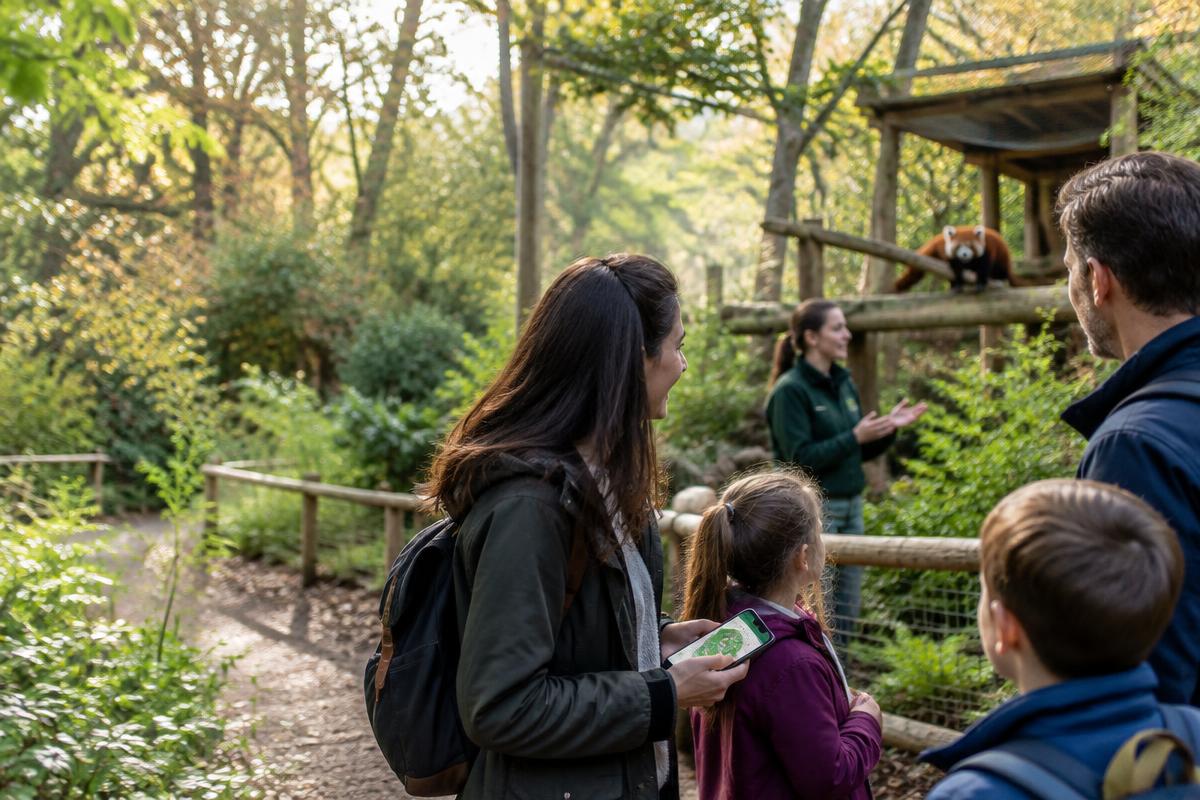
Imagine a visitor looking at your red pandas. With a guest experience platform like n-gage.io, they could scan a QR code or tap a button in the app to watch a video of the pandas' keeper, read a blog post about their conservation in the wild, or see a gallery of pictures from when they first arrived. This enriched content makes the visit more meaningful and memorable.
This deeper engagement links directly to commercial support. A visitor who has just learned about your breeding programme is more likely to make a donation or purchase an animal adoption. An app makes this easy, with in-the-moment opportunities to buy memberships or pre-order food to skip a queue. It provides convenient ways for supporters to show their appreciation, boosting your secondary spend while being helpful to the visitor.
Accessibility for All
Turning Footfall into Insight
Every day, thousands of people walk your paths. While you see the crowds, it is hard to understand their collective behaviour: which routes are most popular, where bottlenecks form, or how long people spend in the reptile house versus the gift shop. Historically, answering these questions relied on anecdotal staff reports and expensive, infrequent manual surveys.
Visitor intelligence, gathered from the aggregated and anonymised data of a guest app, provides clear answers. It allows you to see the reality of visitor flow. For example, you might discover that a significant number of visitors turn back at a certain junction, never reaching the new nocturnal house. This data provides a starting point for investigation. You can walk the route, identify the problem, perhaps poor signage or an intimidating slope, and make an informed operational change. This data-backed approach allows you to make smarter decisions about everything from sign placement to where to position your next coffee kiosk.
- Identify the most and least popular routes, enclosures, and facilities.
- Analyse average dwell times to understand engagement at key locations.
- Pinpoint physical bottlenecks or areas of visitor confusion.
- Measure the impact of operational changes, like a new path or food outlet.
Practical First Steps
Implementing a digital strategy can feel like a large project, but progress can start with simple, focused steps.
Map your existing journey
Walk your park as if for the first time. Try to find the armadillo enclosure. Pretend you need to find an accessible toilet. Arrive five minutes late for a keeper talk. Note down every point of friction, confusion, or frustration. These are the problems a digital solution can help you solve.
Talk to your team
Your staff and volunteers on the ground are a goldmine of information. Ask them what questions they answer most frequently. Find out where visitors get lost. Ask them what simple change would make their job easier or the guest experience better. Their insights will highlight the most pressing operational needs.
Define your primary goal
Instead of trying to do everything at once, pick one main problem to solve. For instance, is it improving wayfinding, communicating schedule changes, or increasing animal adoptions? By defining a clear objective, you can look for a solution, such as the n-gage.io platform, that is best equipped to meet that specific need. Focusing on the visitor experience enables your core mission, creating happy, engaged supporters who will champion your vital conservation work for years to come.
Want this applied to your attraction?
We are happy to talk through your own plans, even at an early stage.
More for wildlife parks
What real-time wildlife park visitor data can tell you
Learn how real-time wildlife park visitor data can enhance your operations, from optimising staffing and managing visitor flow to increasing secondary spend.
Read articleWildlife park commercial growth: spend, memberships and support
A guide for wildlife park operators on using guest experience technology to boost secondary spend, memberships, donations, and repeat visits. Practical advice.
Read article