
Key takeaways
- Guest experience apps are crucial for managing complex operational environments in zoos and parks.
- Modern visitor expectations for digital ease and clarity are set by daily tech use.
- Real-time communication via apps enhances guest satisfaction and operational flexibility.
- SaaS platforms offer affordable, scalable, and continuously improving digital guest experiences.
- Apps protect the core physical experience, supporting revenue, education, and accessibility.
In 2026, zoos, wildlife parks, and safari parks will navigate a complex environment marked by rising costs, staffing shortages, unpredictable weather, and discerning guests. Simultaneously, digital experience expectations have fundamentally shifted.
A guest experience app is no longer an optional extra but a critical operational and commercial tool. It serves as a digital layer that enhances the physical experience by removing friction, clarifying choices, and fostering guest confidence. When implemented effectively, it supports the organisation's mission without distraction.
This article explores why guest experience apps will be invaluable in 2026 and why a platform-based approach is increasingly the only sustainable way forward.
Why Guest Experience Apps are Essential for Visitor Attractions
Managing the Modern Visit’s Small Moments
A visit to a zoo or safari park spans hours, involving numerous small decisions that collectively determine whether the day is enjoyable or exhausting. These decisions often concern logistics, timing, and confidence, rather than the animals themselves.
Guests frequently ponder their next destination, travel distance, potential missed attractions, and when to eat or attend a talk. Each moment of uncertainty adds cognitive load, particularly for families juggling children and energy levels.
In 2026, parks that consistently deliver positive experiences will be those that proactively support guests through these moments. A guest experience app acts as a subtle guide, providing reassurance and direction without demanding constant attention, thereby improving the overall perception of the visit.
Meeting Modern Digital Expectations
Guests arrive with expectations shaped by their daily use of advanced digital services. Navigation apps offer real-time location and travel times, retail apps provide instant order updates, and travel apps notify users of delays promptly.
When parks lack similar digital support (such as easily accessible schedules or clear site orientation), the experience feels outdated. In 2026, this digital gap will be even more critical, as guests increasingly equate ease and clarity with quality. A guest experience app helps parks meet these expectations intuitively, without guests resorting to external tools or guesswork.
Real-time Operations Demand Real-time Communication
Zoos and safari parks are dynamic environments, with animal welfare decisions, weather changes, staffing issues, and crowd levels constantly impacting the guest experience. Many parks still rely on communication methods that assume a static environment.
A guest experience app provides operations teams with a flexible way to respond to real-time events. Schedules can be updated instantly, alerts sent to pre-empt frustration, and alternatives suggested for congested areas. This capability fosters a sense of being looked after, even when conditions are challenging.
Protecting Guest Satisfaction During Disruption
Disruption is inevitable at any attraction; guest satisfaction hinges on how these issues are communicated and managed. Without a clear digital channel, guests often discover problems incidentally, leading to frustration.
An app allows parks to proactively address issues with clear explanations, early warnings, and thoughtful alternatives, significantly reducing disappointment. Even small gestures, like acknowledging inconvenience, can improve guest sentiment.
Driving In-visit Revenue Growth
While ticketing strategies have evolved, many parks underperform in generating in-visit revenue, often because guests miss opportunities. A guest experience app enhances visibility and context, helping guests discover nearby options that fit their schedule and enhance their day, reducing friction rather than creating pressure.
- Food and beverage discovery, especially during peak times.
- Experiences and upgrades requiring planning or booking.
- Retail reminders at logical journey points.
- Location-based upsell opportunities.
- Conservation donations linked to specific animals or stories.
In 2026, parks that integrate commercial opportunities seamlessly into the guest journey, making them feel helpful, will see the most effective revenue growth.
Making Personalisation Practical
Zoos and safari parks cater to diverse audiences, from families with toddlers to adult couples and repeat members. A generic approach often fails to satisfy any group particularly well. Practical personalisation, even if simple, can significantly boost satisfaction.
Examples include suggested routes for limited time, indoor recommendations during bad weather, or 'what's new' messages for members. Platforms like n-gage.io focus on surfacing relevant information at the right moment based on context, rather than intrusive profiling.
Enhancing Wayfinding for Better Experiences
Effective wayfinding is a strong predictor of perceived value, especially on large or complex sites. Guests who feel lost or repeatedly backtrack often perceive their day as shorter or less complete.
A guest experience app offers reassurance through GPS-enabled maps, clear walking times, and confidence in navigation, which is crucial for families, older visitors, and those with accessibility needs. For safari parks, digital guidance helps manage expectations regarding routes, dwell times, and congestion.
Strengthening Conservation Storytelling
Conservation and education are core to zoos and wildlife parks, but their messages can be lost amidst the day's activities. Signage competes for attention, and talks can be missed.
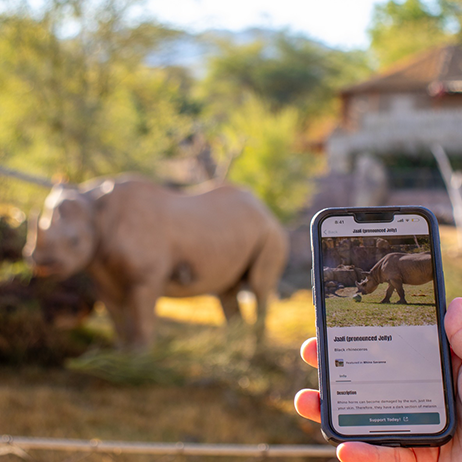
An app enables conservation storytelling when guests are most engaged, offering real-time, location-based species information, keeper stories, and behind-the-scenes insights on demand. This approach supports measurable impact, allowing parks to refine messaging, demonstrate educational reach, and strengthen funding efforts.
Leveraging Usable Data for Informed Decisions
While many parks collect data, it often remains disconnected from the actual guest experience. A guest experience platform bridges this gap by linking content, navigation, and behaviour, creating a powerful feedback loop. Teams can observe what guests view, where they spend time, and which experiences attract interest, informing decisions on programming, staffing, layout, and investment.
In 2026, the utility of data, rather than its volume, will be key. Platforms that convert behaviour into actionable insights will offer a significant long-term advantage.
Fostering Membership and Repeat Visits
Membership programmes thrive on relevance and ease, with members desiring recognition, information, and rewards for their loyalty. A guest experience app can serve as a central touchpoint for members, supporting renewals, highlighting new experiences, and helping repeat visitors rediscover the park.
Strengthening this digital relationship boosts visit frequency and advocacy, acting as a critical differentiator in a competitive leisure market.
Enhancing Accessibility and Inclusivity
True accessibility encompasses clear communication, predictable experiences, and the confidence to plan a visit without anxiety. A guest experience app allows parks to share accessibility information discreetly and clearly.
Routes, facilities, and experience descriptions can be made available in a way that empowers guests, reinforcing the park’s commitment to inclusion for a diverse range of visitors.
The Strategic Advantage of a Platform Approach
In 2026, merely launching an app will not suffice; the true value lies in an adaptable platform. A sustainable guest experience solution integrates a branded app, an operator system for attraction teams, existing system integration, and actionable analytics. This approach avoids the limitations of bespoke builds, creating an evolving system for continuous improvement.
SaaS: Affordable and Future-Proof
Historically, the cost of bespoke app development, with large upfront fees and ongoing maintenance, has been a significant barrier. This model is becoming outdated. Software-as-a-Service (SaaS) platforms, like n-gage.io, transform the economics of digital guest experience by replacing substantial upfront investment with predictable, manageable monthly licence fees.
Parks subscribe to a ready-made, attraction-specific platform, drastically lowering the barrier to entry and making digital transformation accessible to organisations of all sizes.
Lower Financial Risk and Faster ROI
A SaaS model eliminates the need for significant capital outlay before value is realised, spreading costs over time to align with operational budgets. This makes digital investment easier to approve, reduces risk, and allows for incremental value demonstration. For many parks, this shift makes a guest experience app viable where it previously was not.
Faster Deployment and Earlier Impact
Unlike lengthy bespoke builds, a SaaS platform is pre-built and refined. Deployment focuses on configuration, branding, and content, not core functionality. This means parks can launch faster, improve guest experience within weeks, respond to seasonal pressures, and iterate based on real guest behaviour almost immediately. Speed to value is crucial in this sector.
Continuous Improvement Without Cost Spikes
Custom software often stagnates, with improvements requiring new budgets. A SaaS platform evolves continuously, delivering new features, performance enhancements, security updates, and compatibility changes as part of the licence. This ensures the guest experience keeps pace with expectations without repeated reinvestment.
- No surprise upgrade costs.
- Access to new capabilities upon release.
- Software that improves rather than ages.
- Resilience as operating systems and devices change.
This ongoing evolution will be essential in 2026 as technology and guest expectations continue to advance rapidly.
Reduced Internal Technical Burden
Zoos and wildlife parks are not software companies. Managing custom apps demands specialist technical knowledge and vendor coordination. A SaaS solution transfers this burden to the platform provider, handling hosting, security, performance, and core maintenance. This allows internal teams to focus on running the attraction and delivering great experiences, reducing reliance on single developers or agencies.
Built for Integration, Not Isolation
Modern SaaS platforms are designed for integration with other systems like ticketing, CRM, membership, and analytics. A platform approach simplifies gradual integration, adapts as systems change, and avoids costly rebuilds. This flexibility is inherent to well-designed SaaS solutions, unlike bespoke builds.
Scalability Matching Attendance Patterns
Zoo and safari park attendance fluctuates significantly with peaks, seasonal surges, and events. SaaS platforms automatically scale to meet these demands, ensuring reliability during busy periods without requiring parks to overinvest in year-round infrastructure. This protects the guest experience precisely when it matters most.
In summary, SaaS makes digital guest experience sustainable. In 2026, the primary question for parks will be how to deliver a guest experience app responsibly and sustainably. SaaS platforms, like n-gage.io, answer this by offering affordable deployment, reduced risk, and long-term relevance. By replacing large upfront investment with predictable licensing and bundling continuous improvement, support, and scalability, SaaS transforms digital guest experience from a 'nice to have' into a 'must-have' for 2026.
The Bottom Line: Protecting the Core Experience
Zoos, wildlife parks, and safari parks will always be fundamentally physical, emotional experiences centred on species and conservation. A guest experience app does not replace this core; it protects it.
In 2026, a well-designed guest experience app will reduce friction, enhance perceived value, support revenue growth, strengthen conservation storytelling, and empower teams in an increasingly complex operating environment. Parks that thrive will be those that design the entire guest journey, before, during, and after the visit. Deploying a guest experience app, built on a platform designed for attractions, will be one of the most beneficial decisions taken in 2026.
Want this applied to your attraction?
We are happy to talk through your own plans, even at an early stage.
Related reading
The 2025 Standards of Modern Zoo Practice: A Leadership Guide to Digital Compliance and Visitor Impact
The revised Standards of Modern Zoo Practice for Great Britain raise the bar on education, accessibility, interpretation and visitor management. Here is what that means in practice for zoo leadership teams.
Read articleMeasuring the Guest Journey Beyond Ticket Sales
Admissions data tells you who arrived and what they paid. It says nothing about the four to six hours that follow, which is where satisfaction, spend and return visits are decided.
Read article