/Blog/Authors/Bryan%20circle.png?width=90&name=Bryan%20circle.png)
Why a Guest Experience App Is Becoming Essential for Outdoor Museums
Outdoor museums are operating in one of the most complex and demanding environments the cultural and heritage sector has faced in recent decades. Operating costs continue to rise across utilities, insurance, compliance, maintenance and staffing. Conservation, collections care and landscape management require sustained long-term investment, often with limited flexibility because much of the work is preventative and cannot be deferred without future cost. Recruiting and retaining skilled seasonal staff remains challenging in a competitive labour market, while visitor expectations around service consistency have increased rather than softened. Weather volatility adds another layer of operational complexity.
These conditions influence everything from crowd flow to visitor satisfaction and secondary spend. At the same time, visitor behaviour is becoming less predictable, shaped by shorter booking windows, economic pressure, more spontaneous decision-making and increased competition for leisure time. Guests are more likely to arrive with incomplete planning and then rely on the site to help them shape their day.
Visitors are also more selective — and less forgiving. Experiences that feel confusing, fragmented or poorly supported are quickly reflected in ratings, reviews and social sharing. A single frustrating moment can disproportionately affect overall perception of value, particularly when travel time and total cost of a day out have increased.
Alongside these pressures, expectations around digital experience have fundamentally shifted. Guests now arrive with assumptions shaped by the best services they use in everyday life: clarity on demand, intuitive navigation, real-time updates, accessible information and experiences that feel thoughtfully designed from beginning to end. They may not consciously think “this should have an app”, but they do notice when information is hard to find, when routes are unclear, or when simple questions require trial and error.
In this context, a guest experience app is no longer a bolt-on enhancement or a marketing experiment. It is becoming a core operational and commercial layer — one that shapes how the physical experience of an outdoor museum is perceived, navigated and remembered. When implemented well, it does not compete with authenticity or atmosphere. Instead, it protects them by removing friction, reducing uncertainty and allowing visitors to focus on the experience itself rather than the logistics of managing it.
The Modern Outdoor Museum Visit Is Defined by Dozens of Small Moments
A visit to an outdoor museum typically spans several hours and often involves significant physical movement across large and varied terrain. Visitors move between reconstructed environments, trails, live demonstration areas, exhibition spaces, play zones, catering outlets, transport links and interpretation points. Throughout that journey, they make a continuous stream of small decisions — many of which determine whether the day feels smooth and satisfying or tiring and incomplete.
These decisions are rarely about the intrinsic quality of the site.
More often, they revolve around logistics, timing and confidence. Visitors wonder where to go next, how far a particular exhibit is, how long a walking route will take, whether the path is suitable for a pushchair or wheelchair, whether there is seating along the way, whether a demonstration will still be running when they arrive, whether they have time to see one more area before closing, and where the nearest toilets or refreshments are in relation to their route.
Families are balancing children’s energy levels, attention spans and snack needs. Older visitors pace themselves carefully and may be anxious about long distances without rest points. First-time guests try to work out what constitutes a “complete” visit and may worry about missing highlights. Returning visitors may be looking for what has changed since last time. International visitors may be navigating language barriers alongside orientation challenges. School groups and other organised parties face different pressures again, including time-boxed schedules and duty of care.
Each unresolved question adds cognitive load. In large open-air environments, these uncertainties compound quickly, and the result can be a form of hidden fatigue. Visitors may shorten their visit, skip areas, or disengage from interpretation simply because they are managing too many small logistical uncertainties at once.
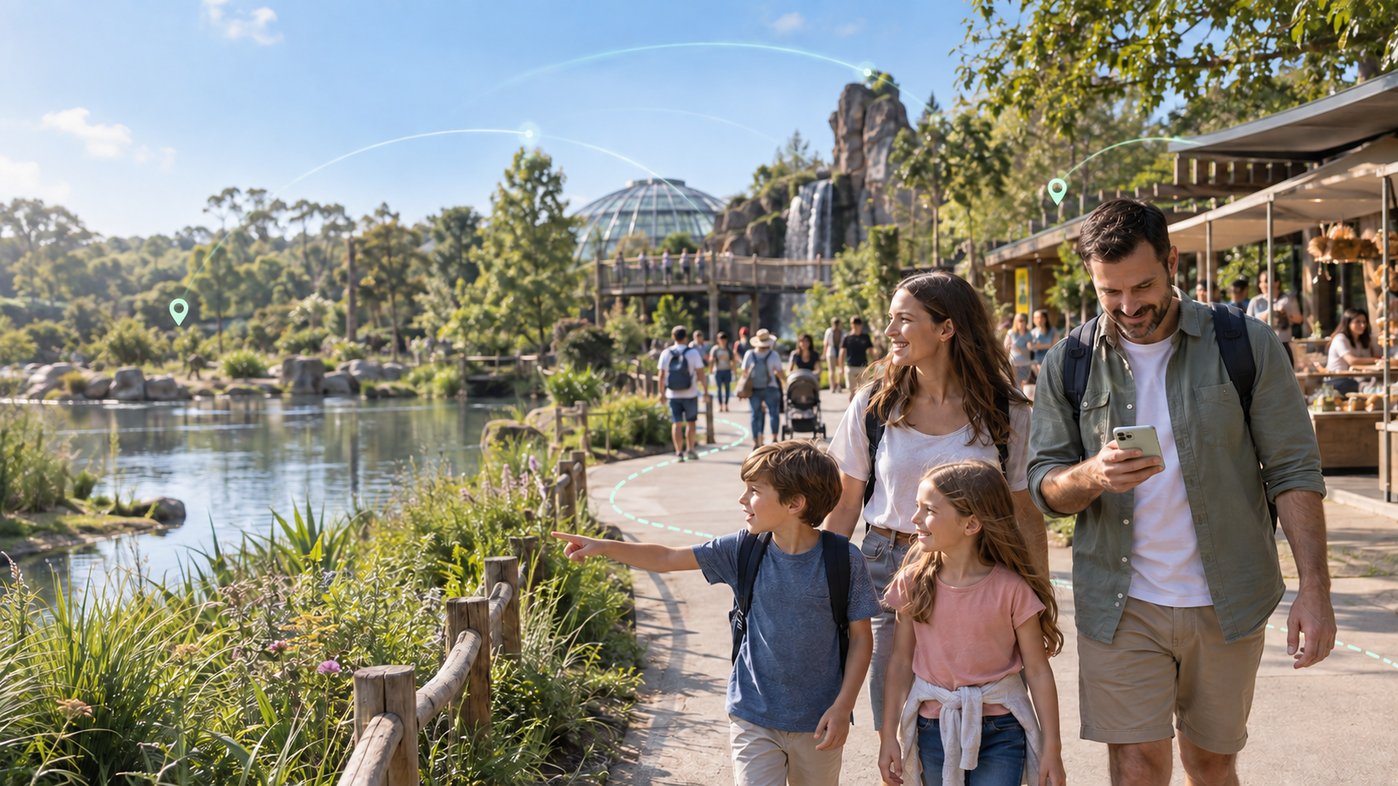
Outdoor museums that deliver consistently positive experiences are those that support visitors through these moments rather than leaving them to chance. A guest experience app functions as a discreet guide in the background, offering reassurance and direction without demanding constant attention. It helps visitors make better decisions, reduces unnecessary walking and backtracking, and makes the day feel more intentional. The most important outcome is not that visitors “use the app”, but that they feel supported — and therefore perceive the museum as higher quality and better value, even though the physical environment has not changed.
Visitor Expectations Are Shaped Far Beyond the Cultural Sector
Visitors no longer compare an outdoor museum solely with other heritage attractions. They compare it, consciously or subconsciously, with the standards set by retail, travel, hospitality and transport services. Navigation apps show real-time location and walking times. Retail platforms provide instant confirmations and clear wayfinding inside stores. Travel services update users before inconvenience escalates. Even basic customer service experiences increasingly assume on-demand information and proactive communication.
These everyday experiences create a baseline expectation: information should be easy to find, timely and reliable. Visitors increasingly assume that if something changes, they will be told; if they need to make a choice, they will be given enough context to choose well. They also assume the experience has been designed end-to-end, not simply curated on site and left to the visitor to assemble.
When visitors struggle to understand what is open today, discover a closure only after walking across the site, feel unsure how best to navigate a large landscape, or cannot quickly answer simple questions about times and locations, the experience can feel disorganised. This perception has little to do with authenticity and everything to do with clarity and support.
Ease and transparency are increasingly interpreted as professionalism. The better the digital support, the more visitors assume the organisation is well managed. A guest app helps outdoor museums meet modern expectations without compromising atmosphere. It ensures that operational complexity does not translate into visitor confusion.
Real-Time Operations Demand Real-Time Communication
Outdoor museums operate in environments where conditions shift throughout the day. Weather affects the guest experience. Live demonstrations and tours vary in capacity and timing. Equipment failures happen. Steam machinery or old vehicles may be subject to operational constraints. Events can reshape access routes from one day to the next. Seasonal programming alters flow in ways that are difficult to communicate via static materials.
Yet many sites still rely on communication methods designed for static experiences: printed maps, noticeboards, temporary signage and ad-hoc verbal updates. These tools cannot update quickly enough, and they rely on visitors being in the right place at the right time to receive the information.
Teams can update opening statuses instantly. Notifications can inform visitors of changes before disappointment sets in. Alternative routes can be suggested calmly, with the context visitors need to understand why a change has occurred. When capacity is limited, messaging can set expectations early and direct visitors to other nearby experiences.
This real-time capability is not simply about efficiency. It changes the way visitors perceive the organisation. When communication feels timely and intentional, visitors feel looked after. They trust that the museum is being managed thoughtfully, even when conditions are challenging, and that trust becomes a major driver of satisfaction and recommendation.
Protecting Visitor Satisfaction When Things Do Not Go to Plan
No outdoor museum can remove disruption entirely. What distinguishes organisations is how disruption is handled. Visitors are generally reasonable about closures, changes and constraints when they feel informed. They become frustrated when they feel problems were avoidable or poorly communicated.
Without proactive communication, visitors discover issues by accident: a long walk to a closed exhibit, an unexpectedly full demonstration, a blocked route, a cancelled talk, or a café queue caused by an unanticipated peak. These moments are frustrating precisely because they feel preventable — and because they interrupt the visitor’s sense of progress and control over their day.
Technology allows teams to get ahead of these situations. Early warnings reduce wasted effort. Clear explanations help visitors accept constraints. Thoughtful alternatives preserve momentum so the day still feels successful. Even small gestures, such as explaining that a building is closed to protect fragile materials or ensure safety, can transform irritation into understanding.
This has direct reputational value. Visitors are far more likely to mention disruption in reviews than to mention seamless operations. Reducing friction in the moments that matter most protects sentiment, ratings and future visitation.
Revenue Growth Increasingly Happens During the Visit
Admissions revenue is finite. Secondary spend is where many outdoor museums can achieve the greatest uplift, but opportunities are often missed because visitors do not discover them at the right moment. This is rarely due to lack of interest. More often it is a discoverability problem created by scale, dispersed facilities and visitors’ limited attention while navigating the day.
Visitors may leave without visiting the café because they did not realise it was nearby or because they could not judge queue levels and timings. They may miss a paid experience because they discovered it too late to fit it into their route. They may forget about the shop until closing. They may not understand that a donation supports a specific conservation outcome. They may not realise that a behind-the-scenes session exists at all.
An app provides visibility and context. It helps visitors understand what is available near them, what fits into their remaining time, and what might genuinely enhance their visit. The most effective approaches reduce friction rather than create pressure. When prompts feel relevant — connected to location, timing or interest — they are perceived as helpful guidance, not marketing.
In-visit revenue growth also benefits from small behavioural nudges. Timely reminders near natural exit points support retail conversion. Location-aware prompts can guide visitors to refreshments before they become tired or irritable. Clear messaging about availability and timing can reduce missed opportunities and improve perceived fairness. Donation prompts linked to specific stories, projects or visible outcomes are more compelling than generic appeals.
Outdoor museums that grow revenue most effectively will be those that integrate commercial opportunities seamlessly into the visitor journey, making them feel like part of a well-supported day rather than an afterthought.
Personalisation Is Becoming Practical Rather Than Theoretical
Outdoor museums serve diverse audiences simultaneously. Families often want highlights, play opportunities and shorter loops. Enthusiasts want depth, detail and context. Members want recognition and reasons to return. School groups need structured learning outcomes and predictable routing. International tourists need language support and confidence that they have seen the essentials. Visitors with access needs require clear, discreet information and the ability to plan without anxiety. Treating all visitors the same increasingly leads to generic experiences that fail to fully satisfy anyone. Yet personalisation does not need to be complex to be effective. It can be practical, contextual and respectful.
This is where a guest experience solution can provide suggested routes based on time available. It can offer a family-friendly layer of interpretation alongside deeper content for enthusiasts. It can surface “what’s new since your last visit” content for members. It can adapt route suggestions based on weather, congestion or accessibility. It can recommend experiences that align with expressed interests without requiring intrusive profiling.
The goal is not to overwhelm visitors with choice. It is to surface the most relevant information at the right moment, reducing decision fatigue and increasing satisfaction. When personalisation feels like good service rather than targeted marketing, it strengthens trust and makes the experience feel designed rather than improvised.
Wayfinding Has a Greater Impact Than Many Sites Realise
Wayfinding is one of the strongest predictors of perceived value on large outdoor sites. Visitors who feel lost, repeatedly backtrack, or miss key exhibits often leave feeling the visit was shorter or less complete than expected. This isn’t simply a navigation problem; it affects emotional perception. When visitors feel uncertain, they lose confidence, become more conservative in their choices, and may disengage earlier.
Traditional maps help, but they often fail to answer the questions visitors actually have in the moment: where am I right now, how long will this walk take, is there an easier route, is the path suitable, and what is nearby that I might otherwise miss?

A digital solution provides reassurance through interactive maps that show live location, clear routes between zones, realistic walking time estimates and accessibility-aware navigation. It also helps visitors understand the site’s structure, preventing the “we didn’t realise there was another whole area” experience that so often leads to regret.
Better wayfinding reduces fatigue, builds confidence and increases exploration. It also improves operational outcomes by smoothing visitor flow, reducing pressure on pinch points and helping visitors distribute themselves more evenly across the site.
Interpretation and Storytelling That Travels With the Visitor
Outdoor museums exist to tell stories — about people, places, craft, industry, culture and environment. Interpretation is at the heart of the mission, yet it often competes with limited time and attention. Visitors cannot read every panel. They cannot attend every talk. They may not want to stop and study signage in the middle of a long route. They may also have different learning preferences, from audio to visuals to short-form highlights.
An on-device experience naturally allows storytelling to travel with the visitor. Interpretation can be layered, optional and self-paced. Visitors can engage when curiosity strikes, without interrupting the physical environment or the atmosphere of the site. Digital interpretation can be delivered in multiple languages without costly physical duplication. Audio interpretation supports accessibility and allows visitors to stay immersed in the environment rather than stopping to read.
This approach also supports richer formats: short films, interviews, archival imagery, “then and now” comparisons, object stories and interactive learning. It can complement live interpretation, not replace it, by extending content beyond scheduled talks and enabling deeper engagement for those who want it.
Importantly, digital interpretation can be measured. Teams can understand what content is used, where visitors drop off, and which stories resonate. Over time, interpretation becomes iterative and evidence-led rather than static.
Data Becomes Valuable When It Is Connected to Experience
Data is often described as an asset in the cultural sector, yet in many outdoor museums it can remain fragmented, underused and disconnected from the lived visitor journey. Ticketing systems capture attendance volume. Retail systems record transactions. Membership platforms track renewals. Feedback surveys provide sentiment snapshots. But these sources rarely explain why visitors behaved as they did, what they actually engaged with, where they spent time, what they missed, or where friction occurred.
A SaaS operator platform changes the nature of data by connecting behaviour to experience and moving data from silos into a single consolidated platform. It links what visitors view, where they go, how long they dwell, which routes they choose, what content they engage with, and how they respond to prompts and notifications. Instead of having isolated metrics, the organisation gains a connected picture of the visitor journey.
This creates a powerful feedback loop between operational intent and real outcomes. Teams can see whether visitors follow recommended routes or avoid certain areas. They can identify pinch points where visitors slow down, cluster, or backtrack. They can detect patterns that suggest confusion, such as repeated toggling between map views or frequent searches for facilities. They can understand how long visitors spend in each zone and where engagement peaks or collapses. They can see which exhibits function as “anchors” that pull visitors deeper into the site and which areas are consistently under-visited.
The most important shift is that decisions can move from anecdote to evidence. If a zone is underperforming, the platform can help distinguish whether the issue is discoverability, route friction, content relevance, signage, staff presence or timing. If café revenue is below expectation, data can reveal whether visitors are not passing nearby, are arriving at poor times, or are diverting due to queue anxiety. If paid experiences are under-attended, you can identify whether visitors are discovering them too late, misunderstanding timing, or failing to understand value.
Connected data becomes even more valuable when linked to commercial and operational outcomes. By correlating movement and engagement with spend, museums can understand how route design influences café visitation, how interpretation depth affects shop conversion, and how engagement with conservation stories correlates with donation behaviour. It becomes possible to test and refine interventions, such as changing prompts, repositioning experiences, adjusting schedules, or improving wayfinding, and then see whether behaviour changes.
Over time, this insight supports better decisions around staffing allocation, programming, interpretation investment, facility placement, signage and infrastructure priorities. It also supports strategic reporting with far greater credibility, because the organisation can evidence how improvements influence visitor satisfaction, dwell time, distribution and revenue.
The advantage is not “more data”. It is more useful data — data that is connected to experience, that reveals cause and effect, and that drives continuous improvement. When data is structured around the visitor journey, it becomes a practical tool for resilience, not a retrospective report.
Building a 365-Day Relationship in an Annual Pass World
An increasing number of outdoor museums operate some form of annual pass model, often converting a first-day ticket purchase into 12 months of return access. This approach recognises two important realities: the cost of acquisition is high, and a single visit rarely delivers the full value of what the site can offer across seasons. However, an annual pass alone does not guarantee repeat visitation.
Without structured engagement between visits, the relationship can quickly become dormant. Visitors may fully intend to return “at some point,” but without timely reminders, new content prompts or seasonal triggers, inertia sets in. The annual pass risks becoming a passive entitlement rather than an active relationship. An app fundamentally changes this dynamic.
From One-Day Transaction to Year-Round Connection
Traditionally, the visitor relationship peaks on the day of the visit and then fades. Follow-up communication may rely on email campaigns or social media visibility, both of which are subject to crowded inboxes and algorithm limitations.
A guest experience app becomes a direct, owned communication channel. It sits on the visitor’s device long after the physical visit ends. That presence alone shifts the psychology of the relationship — from transactional to ongoing.
The app can:
-
Remind annual pass holders of seasonal events or limited-time programming
-
Highlight new exhibitions, demonstrations or refreshed interpretation
-
Surface “what’s changed since your last visit” updates
-
Promote member-exclusive previews or behind-the-scenes content
-
Encourage return visits during quieter periods
These prompts are contextual, timely and highly visible — far more so than a generic social media post.
Reinforcing the Value of the Annual Pass
For many visitors, the decision to upgrade to an annual pass is motivated by perceived future value. If that future value is not actively demonstrated, enthusiasm can wane. A guest app can reinforce value by regularly reminding visitors what they have access to. It can surface upcoming seasonal highlights, educational workshops, family-friendly activities, conservation milestones or limited-run events.
Importantly, it can also personalise this communication. A family that engaged heavily with children’s interpretation during their first visit can receive prompts about school holiday trails. An enthusiast who explored deeper historical content can be notified about specialist talks or new research. A visitor who engaged with conservation storytelling can be updated on project progress. The annual pass stops being abstract and becomes tangible.
Supporting Seasonal Rediscovery
Outdoor museums are inherently seasonal environments. Landscapes change. Demonstrations vary. Events come and go. Yet many first-time visitors experience only a single seasonal snapshot. A guest app can reframe the site as a changing environment worth revisiting throughout the year. By surfacing imagery, event previews and seasonal highlights within the app, it reminds visitors that the experience evolves. This not only increases repeat visitation but also redistributes attendance more evenly across the calendar — supporting operational stability.
Turning Membership into Advocacy
An engaged annual pass holder is more likely to recommend the museum to others. An app can deepen this advocacy by providing shareable event links, referral incentives or social prompts integrated within the platform. When visitors feel part of an ongoing community rather than a one-off audience, advocacy strengthens naturally.
Reducing Reliance on Third-Party Channels
Perhaps most strategically, the app becomes an owned marketing channel. Communication is no longer dependent solely on social media algorithms, advertising budgets or email open rates. Push notifications, in-app messaging and personalised content allow direct, measurable engagement.
This increases campaign effectiveness, reduces acquisition costs over time and builds resilience against external platform volatility.
From Day Visit to Lifetime Value
When viewed strategically, the annual pass model is about lifetime value rather than single-day revenue. A guest experience app amplifies this by extending the relationship beyond the physical visit, reinforcing relevance, encouraging repeat engagement and strengthening loyalty.
Instead of relying on memory alone to drive return visits, the museum maintains an active presence — reminding visitors of what they have yet to experience, what has changed and why it is worth coming back.
In this way, the guest experience app is not just a tool for supporting the day of visit. It becomes infrastructure for sustaining a 365-day relationship — turning first-time visitors into repeat guests, repeat guests into members, and members into long-term advocates. For outdoor museums embracing annual passes as a growth strategy, this digital continuity is no longer optional. It is a critical component of making year-long access feel genuinely valuable.
Why the Platform Approach Matters More Than the App Itself
A standalone app can become static quickly. Without the ability to evolve, integrate, measure and improve, it risks becoming another underused digital artefact. The real value lies in a platform approach that supports continuous improvement and long-term sustainability.
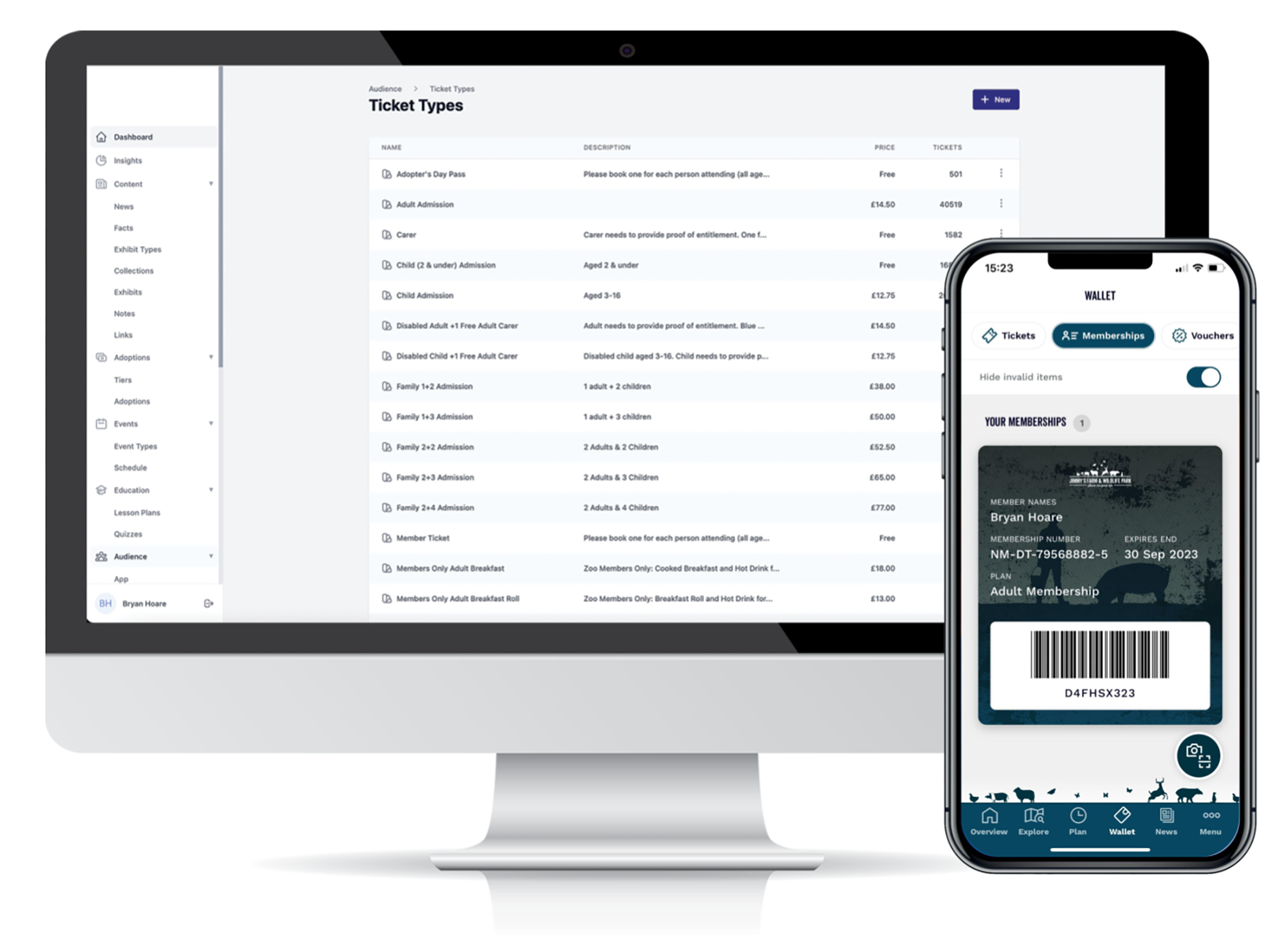
A sustainable guest experience solution combines a fully branded guest app with an operator system designed for attraction teams. It allows content updates without technical bottlenecks, operational messaging without dependence on printed materials, and analytics that inform real decisions. It also enables integration with other systems over time, ensuring the digital guest experience becomes part of the museum’s wider operational ecosystem rather than a disconnected channel.
This platform approach avoids the pitfalls of bespoke builds that are expensive to create, costly to maintain and difficult to adapt. Instead, it creates a living system that grows with the organisation and supports ongoing optimisation based on real visitor behaviour.
Why a SaaS Guest Experience Platform Makes Deployment Affordable and Future-Proof
Traditional bespoke development models often require substantial upfront capital, long build cycles and ongoing technical maintenance. For outdoor museums balancing conservation and operational demands, this risk can be prohibitive — not because the value is unclear, but because the investment profile is difficult to sustain.
A Software-as-a-Service approach transforms the economics of digital guest experience by replacing large upfront investment with predictable, manageable subscription costs. Instead of commissioning a custom build, outdoor museums subscribe to a platform designed specifically for visitor attractions, already tested and refined across real environments. This lowers the barrier to entry and makes digital capability sustainable rather than episodic.
Lower Financial Risk and Faster Return on Investment
A SaaS model removes the need for significant capital outlay before value is realised. Costs are spread over time and align more naturally with operational budgets. This makes investment easier to approve internally and reduces exposure if priorities or funding change. It also makes performance management clearer: ROI can be assessed incrementally against a known subscription cost rather than justified retrospectively after a large build. For many organisations, this shift is what turns digital guest experience from a high-risk project into a feasible operational improvement.
Faster Deployment and Earlier Impact
Bespoke builds often take many months before guests see any benefit. During that time, visitor expectations do not stand still. A SaaS platform is already built, meaning deployment can happen far more quickly and improvements can be delivered while they still matter. Faster deployment also enables earlier learning. Teams can observe real visitor behaviour, refine content, adjust messaging, and optimise routes based on evidence. Rather than aiming for perfection before launch, museums can adopt an iterative approach that delivers value immediately and improves continuously.
Continuous Improvement Without Additional Cost Spikes
Technology evolves constantly. Under bespoke models, updates, compatibility changes, security improvements and feature enhancements often arrive as costly additional projects. This creates cost spikes and uncertainty, and software can quickly age. With SaaS, improvements are delivered continuously as part of the licence. New features, performance enhancements, security updates and compatibility improvements are deployed centrally. The platform becomes stronger year after year rather than ageing. This stability matters when digital experience becomes operationally significant rather than optional.
Reduced Internal Technical Burden
Outdoor museums are not software organisations. Their expertise lies in conservation, learning, storytelling and visitor care. A SaaS solution shifts hosting, security, performance management and maintenance to the provider, reducing internal technical burden and lowering operational risk.
This also reduces dependency on individual developers, agencies or specific internal staff. Digital capability becomes resilient to staffing changes and less vulnerable to knowledge bottlenecks.
Built for Integration, Not Isolation
Modern attraction operations rely on multiple systems, from ticketing and CRM to retail, membership and analytics. A guest experience platform must integrate over time to avoid becoming a silo.
Modern SaaS platforms are built with integration in mind, allowing organisations to connect systems gradually and pragmatically. This enables more joined-up reporting, smoother operational workflows and the ability to evolve digital strategy without costly rebuilds.
Scalability That Matches Attendance Patterns
Outdoor museum attendance fluctuates dramatically due to weather, seasonality, school holidays and special events. Digital systems must remain reliable during peak attendance, because that is when visitor experience is most vulnerable and revenue opportunity is highest. SaaS infrastructure is designed to scale automatically, maintaining performance on the busiest days without requiring permanent over investment during quieter periods. This protects the guest experience precisely when it matters most.
Addressing the Perceived Barriers to Introducing a Guest Experience App
Despite the operational, commercial and strategic advantages outlined throughout this blog, many outdoor museums understandably pause before considering a guest experience app. The hesitation is rarely about capability. More often, it is philosophical.
Outdoor museums are guardians of atmosphere, authenticity and immersion. Any new layer — particularly a digital one — must be weighed carefully against the risk of disrupting the historic moment. These concerns are legitimate. They reflect a deep commitment to protecting the integrity of place.
However, the question is not whether digital will be present. Visitors already arrive with smartphones in hand. The real question is whether the museum shapes that digital behaviour in a way that enhances immersion — or leaves it unmanaged.
“Will It Take Visitors Out of the Historic Moment?”
One of the most frequently voiced concerns is that introducing an app will encourage screen-focused behaviour and detract from the lived, sensory experience of the site. Outdoor museums often position themselves as spaces of escape — environments where visitors step away from constant digital noise.
Yet in practice, visitors already use their phones throughout the day — for photography, messaging, searching for information and checking maps. Without structured support, they may search externally, scroll through unrelated content, or become distracted trying to answer simple logistical questions.
A well-designed guest experience app reduces this distraction. It provides quick, contextual clarity — where am I, what’s nearby, what time does this start — and then allows the visitor to return their attention to the physical environment.
Digital engagement in this context is purposeful and momentary. It removes uncertainty, reduces friction and supports immersion rather than undermining it. In many cases, it actually protects the historic setting by reducing the need for intrusive signage, excessive printed materials or physical wayfinding clutter. The aim is not to create a screen-first experience. It is to create a friction-light experience.
“Is a Mobile App Appropriate in a Historic Setting?”
Another common concern is philosophical alignment. Outdoor museums often celebrate craft, tradition and slower rhythms. A mobile app can feel, at first glance, incongruous with that identity.
However, interpretation tools have always evolved. Printed guidebooks, audio guides and wayfinding systems were once considered innovations. They did not erode authenticity — they improved access.
A digital guest experience layer is simply a more flexible and responsive evolution of these tools. It allows storytelling to be layered rather than imposed. It supports multilingual access without duplicating physical infrastructure. It delivers information discreetly rather than visually dominating the landscape.
When designed carefully, the app becomes invisible infrastructure — supporting the experience without altering its character.
“Will Visitors Actually Use It?”
Adoption anxiety is another perceived barrier. Museums often question whether visitors will download and engage with an app for a single visit. The evidence suggests that adoption is directly linked to perceived value. When the app clearly improves navigation, clarifies schedules, supports accessibility and enhances storytelling, visitors see practical benefit. QR-based onboarding, pre-visit messaging and clear positioning as a “visit companion” rather than a marketing tool significantly improve uptake.
Crucially, the impact does not rely on 100% adoption. Even partial engagement generates meaningful operational insight, improves distribution across the site and increases discoverability of key experiences.
“Does It Add Operational Complexity?”
Introducing any new system can raise concerns about internal workload. Outdoor museums often operate with lean teams. There may be apprehension around content updates, messaging management or technical support. Modern SaaS guest experience platforms are designed specifically for visitor attractions. Content management systems are intuitive. Real-time updates can be handled by operational staff without specialist development skills. Hosting, security and performance are managed centrally. In practice, the platform often reduces operational strain. Staff field fewer repetitive questions. Communication becomes proactive rather than reactive. Printed updates and temporary signage become less necessary. The system shifts effort from firefighting to strategic optimisation.
“Is the Investment Justified?”
Cost remains a natural consideration. When conservation and infrastructure needs are pressing, digital investment can feel secondary. However, across existing deployments, the outcomes are measurable and tangible. Across current customers, the n-gage.io app and operator platform are already delivering demonstrable value by helping teams:
-
Increase on-site and post-visit engagement through personalised content, real-time messaging and interactive mapping. Visitors explore more areas, engage more deeply with interpretation and remain connected beyond the physical visit.
-
Drive incremental revenues, particularly through improved visibility and promotion of memberships, paid experiences and in-park spend. Contextual discovery leads to higher secondary spend without increasing pressure or overt selling.
-
Increase repeat visits by maintaining an ongoing relationship with visitors beyond the day of their visit. The app becomes a bridge between visits rather than a one-day utility.
-
Turn the app into a powerful owned marketing channel. Instead of relying solely on third-party platforms and social media algorithms, attractions can communicate directly with their audience, deliver targeted campaigns and promote seasonal events with greater control.
-
Make better, data-led operational and commercial decisions by accessing clear insight into visitor behaviour, dwell time, movement patterns and engagement depth. This intelligence supports smarter programming, staffing allocation, retail placement and investment prioritisation.
For all customers, this has positioned n-gage.io as a business-critical visitor engagement and marketing solution rather than a digital add-on. It becomes part of the core operational infrastructure — influencing satisfaction, revenue performance and long-term resilience.
Balancing Heritage Integrity with Measurable Outcomes
The perceived barriers to introducing a guest experience app stem from a desire to protect authenticity, atmosphere and mission. These priorities are not in conflict with digital support — they are strengthened by it when implementation is thoughtful.
A well-designed platform:
-
Protects immersion by reducing uncertainty
-
Preserves physical space by minimising signage clutter
-
Strengthens storytelling through layered interpretation
-
Improves operational resilience through real-time communication
-
Increases revenue through contextual discovery
-
Builds loyalty through ongoing digital relationships
-
Transforms fragmented data into actionable strategic insight
The debate, therefore, is not whether digital belongs in a historic setting. It is whether outdoor museums can afford to operate without structured digital support in an environment where visitor expectations, operational complexity and financial pressures continue to intensify.
When designed strategically, a guest experience app does not pull visitors out of the historic moment. It enables them to remain in it — more confident, more informed and more engaged — while simultaneously strengthening the museum’s commercial and operational foundations.
The Bottom Line
Outdoor museums will always be physical, emotional experiences rooted in place, story and authenticity. A guest experience app does not replace that essence; it protects it.
By reducing friction, improving wayfinding, strengthening interpretation, supporting sustainable revenue growth and transforming behavioural data into practical intelligence, a well-designed guest experience platform becomes a core operational asset rather than a digital accessory.
The organisations that thrive will be those that design the entire visitor journey — before, during and after the visit — and support that journey with digital infrastructure that delivers clarity, confidence and measurable improvement.