/Blog/Authors/Bryan%20circle.png?width=90&name=Bryan%20circle.png)
Benchmark Survey
reveals key challenges
and priorities in 2026
March 2026
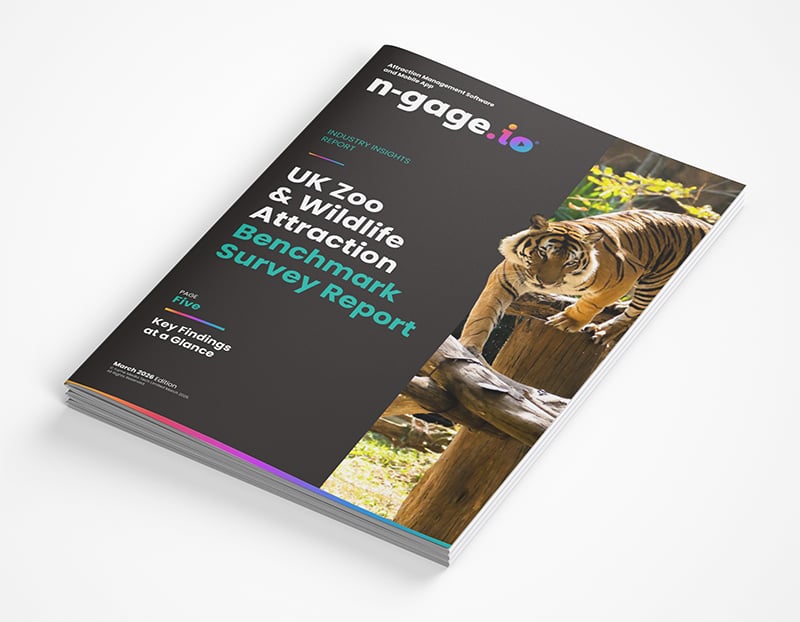
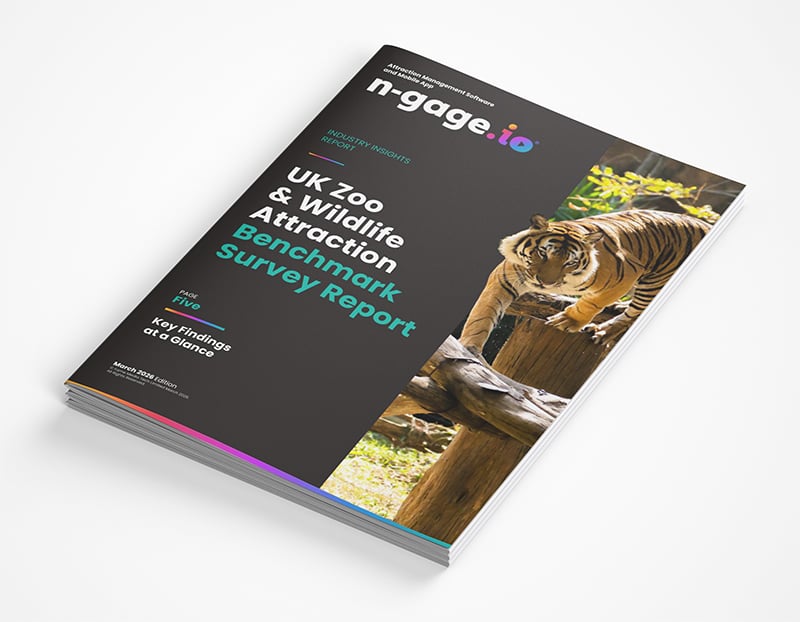
A new industry benchmark report based on responses from zoos and wildlife attractions across the UK highlights rising operating costs, increasing pressure on commercial performance and the growing importance of visitor experience as the sector adapts to a more demanding operating environment.
The UK Zoo & Wildlife Attraction Benchmark Survey 2026, commissioned by n-gage.io and shared with organisations across the BIAZA network, gathered responses from 31 attractions representing a broad cross-section of the sector, from smaller regional parks to large national institutions. The report provides a snapshot of current priorities, pressures and strategic direction across the industry.
The findings show that while organisations remain strongly committed to conservation, education and public engagement, financial and operational realities are increasingly shaping decision-making.
One of the clearest messages from the survey is the scale of cost pressure facing the sector. Rising staff costs were cited by the majority of respondents as the biggest operational challenge, followed by increasing energy costs and the impact of weather volatility on trading days. These pressures are particularly significant for wildlife attractions, which often operate large outdoor estates with high fixed costs and limited flexibility.
As a result, many organisations are placing greater emphasis on improving revenue per visitor rather than relying solely on increasing attendance. Most respondents said that increasing spend per head is now a critical or very important priority, with growing focus on memberships, events, paid experiences, food and beverage and retail.
The survey also highlights that the visitor journey remains an area of significant opportunity. Weather resilience, food and beverage capacity, wayfinding and real-time visitor information were among the most commonly cited friction points affecting the quality of the visit. These issues are increasingly important as attractions seek to encourage longer stays, higher spend and repeat visitation.
Digital capability is another area where the sector is evolving. Most organisations reported having core systems such as ticketing, EPOS and email marketing in place, but only a small number described their systems as fully integrated. Many respondents identified internal capacity, cost and system complexity as the main barriers to making better use of digital tools.
The report also shows growing interest in events and paid experiences as a way to diversify income, although operational capacity and staffing constraints were identified as the main factors limiting growth in these areas.
Overall, the findings suggest the sector is entering a period of gradual but significant transition. Attendance growth remains important, but organisations are increasingly focused on improving yield, strengthening loyalty, reducing operational friction and demonstrating wider impact.
Bryan Hoare, Founder and CEO of n-gage.io, said:
“Zoos and wildlife attractions operate in one of the most complex parts of the visitor economy. They must balance conservation, education, animal welfare and commercial performance, often across large outdoor sites with significant operational demands.
What this survey shows is a sector that understands the challenges it faces and is actively adapting. The conversation is no longer just about visitor numbers. It is about revenue per visitor, visitor engagement, operational efficiency and making better use of data and digital tools.
We hope this benchmark provides useful context for organisations across the industry, and with the support of the sector we would like to develop this into an annual study so that progress can be tracked over time.”
The findings from the survey will also be discussed at the BIAZA Annual Conference in June 2026, where the report will form part of wider conversations about the direction of the sector.
The full report is available to download here.

.png?width=1398&name=Dudley%20App%20(3).png)